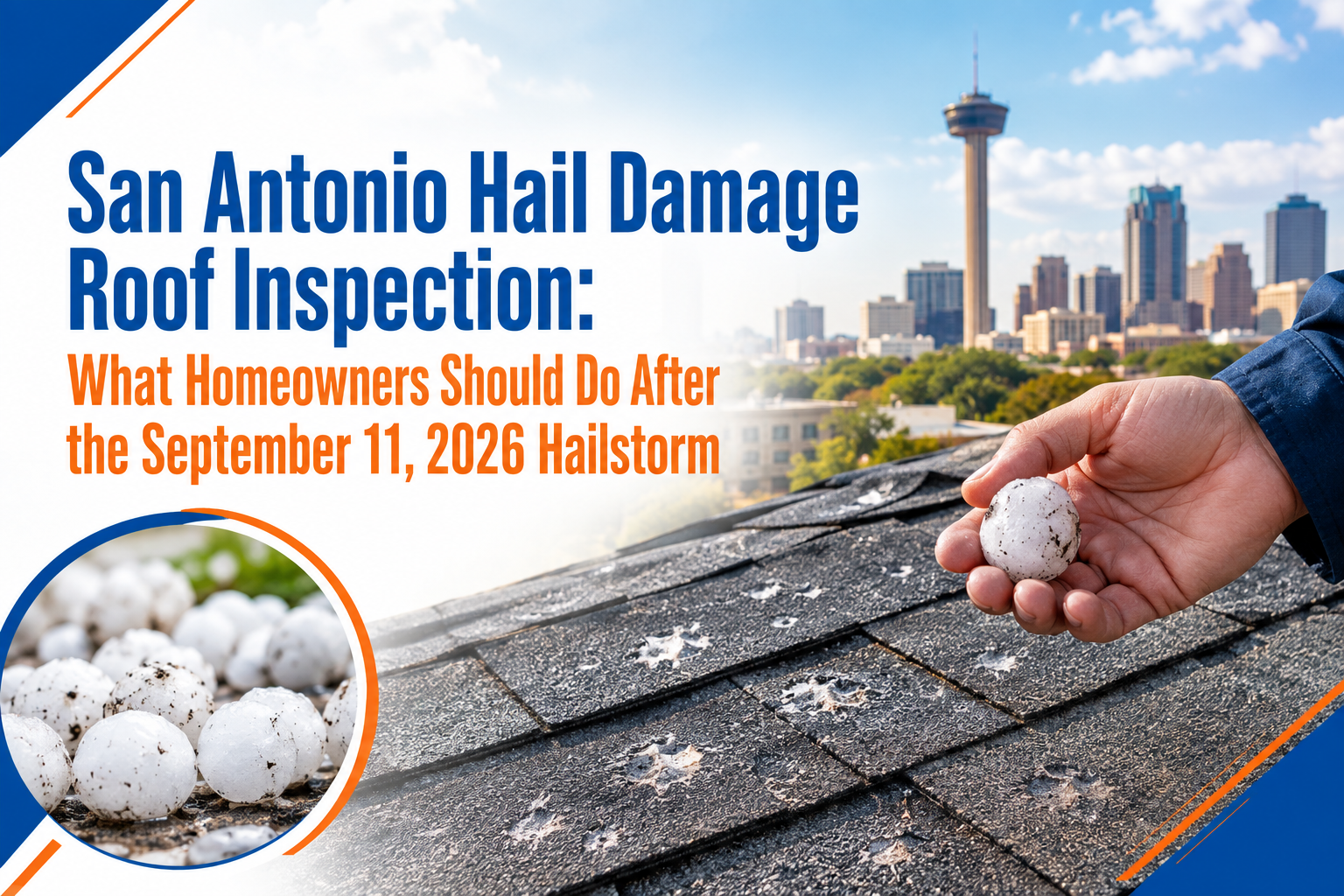
Hail Damage Roof Repair in San Antonio, TX: Repair or Replace Your Roof After a Storm?
Hail Damage Roof Repair in San Antonio, TX: Repair or Replace Your Roof After a Storm?

Should You Repair or Replace a Roof After Hail Damage?
A hail-damaged roof does not automatically need to be replaced. The right solution depends on the severity and extent of damage, age and condition of the roofing system, and type of roofing material.
That’s an important distinction for San Antonio homeowners following the September 11, 2026 hailstorm.
Some roofs may need localized repairs. Others may have widespread damage that makes replacement the more appropriate long-term solution.
How Do Roofers Check for Hail Damage?
A professional hail damage inspection may examine:
● Asphalt shingles
● Metal roofing components
● Flashing
● Roof vents
● Gutters
● Downspouts
● Ridge caps
● Roof penetrations
● Skylights
● Other exterior components
With asphalt shingles, a roofing professional may look for impact marks, bruising, cracks and granule loss.
When Can Hail Damage Be Repaired?
Repair may be appropriate when damage is limited and the remainder of the roofing system remains in good condition.
Examples can include isolated missing shingles, localized flashing damage or damage limited to a particular section.
However, every roof should be evaluated individually.
When Might Roof Replacement Make More Sense?
Replacement may be considered when there is widespread damage across the roofing system, significant deterioration, repeated leaks or a combination of storm damage and an aging roof.
The decision shouldn’t be based solely on whether the roof currently leaks.
The overall condition of the roofing system matters.
What If My Roof Isn’t Leaking?
Don’t automatically assume there isn’t damage.
One of the most important things San Antonio homeowners should understand after a hailstorm is:
No leak does not necessarily mean no roof damage.
Hail impacts can affect roofing materials before water intrusion becomes noticeable inside a house.
How Much Hail Hit San Antonio in September 2026?
The National Weather Service documented large hail in Bexar County during the September 11 storm.
A report near Converse documented hail estimated at 2 to 2.5 inches in diameter, while another report documented golf-ball-size hail.
Large hail combined with strong winds can create conditions capable of damaging roofs, siding, gutters, windows and vehicles.
Should I File an Insurance Claim for Hail Damage?
Whether you should file a claim depends on your specific damage and insurance policy.
The Texas Department of Insurance recommends understanding your roof coverage and deductible. Wind and hail deductibles may differ from other deductibles.
Homeowners should document damage and communicate directly with their insurance company about coverage.
Looking for a Hail Damage Roofer in San Antonio?
If your home was affected by the recent San Antonio storm, Roof Chiefs can inspect your roofing system and help determine whether repairs or replacement should be considered.
Contact Roof Chiefs today to schedule a professional San Antonio hail damage roof inspection.
Quick Answers
Does every hail-damaged roof need replacement?
No. Some damage can be repaired. The extent and location of damage and the roof’s overall condition help determine the appropriate solution.
Can hail shorten the life of a roof?
Significant hail damage can compromise roofing materials and potentially affect their useful life.
Should I replace an older roof after hail damage?
It depends on its condition and extent of storm damage. A professional inspection can help determine the available options.